You cannot copy content of this website, your IP is being recorded
Botox vs. Dermal Fillers: What’s the Difference?
Botox vs. Dermal Fillers: What’s the Difference?
Understanding the distinct differences between Botox® and dermal fillers is the first step toward achieving a beautifully refreshed, youthful appearance. While neuromodulators like Botox safely relax the underlying facial muscles to smooth out dynamic wrinkles—such as frown lines and crow’s feet—dermal fillers like Juvederm® work beneath the surface to physically restore lost volume, plump thinning lips, and lift deep static creases. As a premier injectables specialist in Orlando, FL, Janet Beres, PA-C, leverages her 16 years of clinical dermatology experience and a keen artistic eye to design highly customized, conservative treatment plans. For more information, contact us or schedule an appointment online. We are conveniently located at 7565 W Sand Lake Road, Orlando, FL 32819.
At Spa Blue Skin Care & Laser Center in Orlando, one of the most common questions our lead injector, Janet Beres, PA-C, gets during consultations is: “What is the exact difference between Botox and dermal fillers?”
With over 16 years of specialized experience in dermatology and cosmetic injectables, Janet has helped thousands of patients navigate their anti-aging journeys. While both Botox and fillers are incredible tools for facial rejuvenation, they work in completely different ways, treat different types of wrinkles, and are used on different areas of the face.
Below, Janet breaks down everything you need to know about these two treatments, how they work, and how she uses them to achieve stunning, natural-looking results for our Orlando patients.
The Short Answer: Muscle Relaxation vs. Volume Restoration
The easiest way to remember the difference is this: Botox relaxes, and fillers plump.
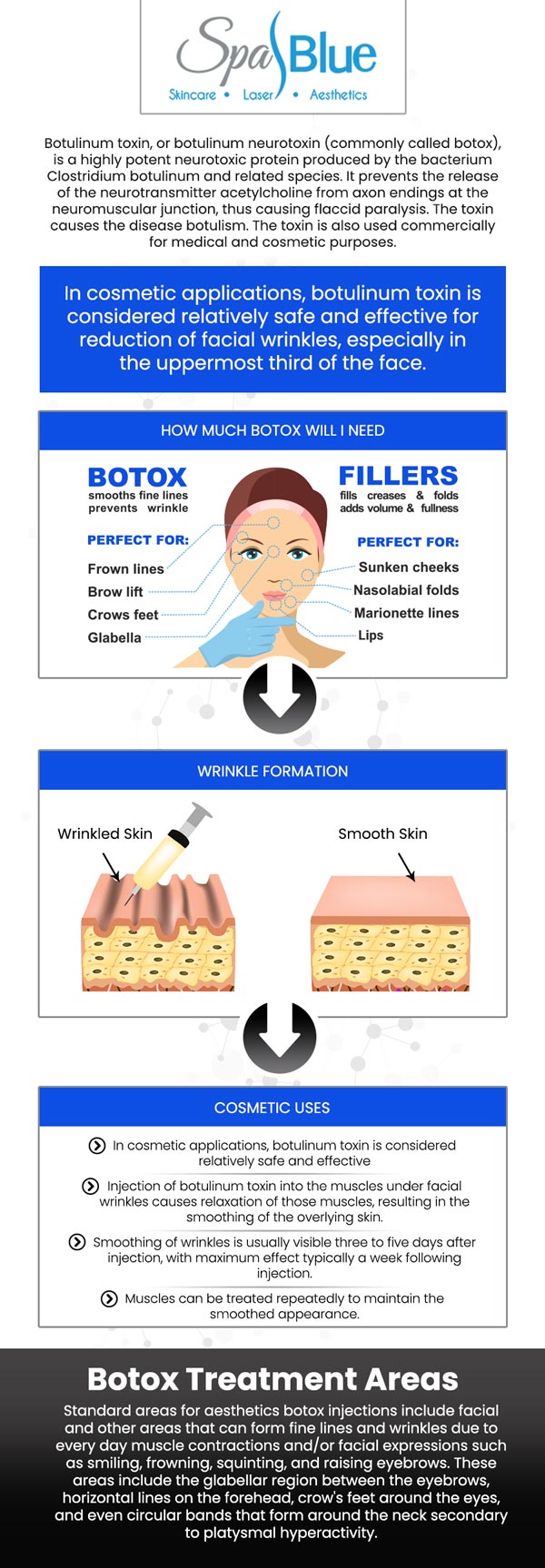
• Botox (Neuromodulators): Freezes the underlying facial muscles to smooth out “dynamic wrinkles” (the lines created when you make facial expressions like smiling or frowning).
• Dermal Fillers: Adds volume beneath the skin to smooth out “static wrinkles” (the lines that are visible even when your face is resting) and enhances facial contours.
Botox vs. Fillers Comparison Guide
Feature
Botox & Dysport
Dermal Fillers (Juvéderm, Restylane, etc.)
Primary Goal
Relaxes muscles to stop wrinkles from forming
Restores volume, plumps lines, and contours the face
Type of Wrinkle
Dynamic (caused by repetitive expressions)
Static (caused by volume loss over time)
Treatment Areas
Upper face (forehead lines, 11s, crow’s feet)
Lower face (lips, cheeks, smile lines, jawline)
How Long it Lasts
3 to 4 months
6 months to 2+ years (depending on the product)
When You See Results
3 to 7 days
Immediately (final results settle in 1-2 weeks)
Feature
Primary Goal
Botox & Dysport
Relaxes muscles to stop wrinkles from forming
Dermal Fillers (Juvéderm, Restylane, etc.)
Restores volume, plumps lines, and contours the face
Feature
Type of Wrinkle
Botox & Dysport
Dynamic (caused by repetitive expressions)
Dermal Fillers (Juvéderm, Restylane, etc.)
Static (caused by volume loss over time)
Feature
Treatment Areas
Botox & Dysport
Upper face (forehead lines, 11s, crow’s feet)
Dermal Fillers (Juvéderm, Restylane, etc.)
Lower face (lips, cheeks, smile lines, jawline)
Feature
How Long it Lasts
Botox & Dysport
3 to 4 months
Dermal Fillers (Juvéderm, Restylane, etc.)
6 months to 2+ years (depending on the product)
Feature
When You See Results
Botox & Dysport
3 to 7 days
Dermal Fillers (Juvéderm, Restylane, etc.)
Immediately (final results settle in 1-2 weeks)
How Does Botox Work?
Botox, along with similar neuromodulators like Dysport and Xeomin, is made from purified botulinum toxin. When injected in small, precise amounts, it temporarily blocks the nerve signals to the targeted muscle.
Because the muscle can no longer contract as forcefully, the skin above it remains smooth. This makes Botox the gold standard for treating the upper third of the face, where repetitive movements cause deep creases over time.
Best for treating:
• Horizontal forehead lines • Glabellar lines (the “11s” between the eyebrows) • Crow’s feet (around the eyes) • Bunny lines (on the nose) • Lip flips and gummy smiles
How Do Dermal Fillers Work?
As we age, our faces naturally lose subcutaneous fat, collagen, and bone density. This causes the skin to sag, facial hollows to appear, and deep folds to form. Dermal fillers, most commonly made of Hyaluronic Acid (HA) like the Juvéderm and Restylane families, are injected beneath the skin to replace that lost volume.
Fillers act as a supportive scaffolding under the skin, lifting tissues, plumping lips, and filling in deep shadows.
Best for treating:
• Nasolabial folds (smile lines from the nose to the mouth) • Marionette lines (lines from the mouth to the chin) • Thin or asymmetrical lips • Hollow cheeks or under-eyes (tear troughs) • Weak jawlines or chins
Janet’s Signature Approach: Combining Botox and Fillers
Can you get Botox and fillers at the same time? Yes! In fact, combining neuromodulators and dermal fillers is one of Janet’s favorite ways to achieve full-face rejuvenation.
Because Botox and fillers address completely different signs of aging, using them together during the same appointment provides a synergistic effect—often referred to as a “Liquid Facelift.” During your consultation, Janet will map out your facial anatomy and create a customized treatment plan. She might recommend Botox to smooth your upper face (like your forehead and crow’s feet) while using a filler to restore lost volume in your cheeks and smile lines.
Meet Your Orlando Injector: Janet Beres, PA-C
When it comes to your face, experience and safety matter. At Spa Blue, your injectables are performed by Janet Beres, a Certified Physician Assistant with over 16 years of dedicated experience in dermatology and aesthetic medicine.
Working under the direction of a Board-Certified Plastic Surgeon, Janet is known throughout the Orlando area for her gentle touch, deep understanding of facial anatomy, and highly personalized, conservative injection techniques. She takes the time to listen to your specific goals so you never leave looking “overdone.”
Frequently Asked Questions Does Botox or filler hurt?
We prioritize your comfort. Botox feels like a quick, tiny pinch. For fillers, we use a strong topical numbing cream, and many modern fillers contain lidocaine (a numbing agent) directly in the product to minimize discomfort.
Is one safer than the other?
Both Botox and FDA-approved dermal fillers are highly safe when administered by a licensed, experienced medical professional in a clinical setting like Spa Blue.
Which one is right for me?
It depends entirely on your unique anatomy and aesthetic goals. If you want to smooth forehead wrinkles, Botox is best. If you want to lift your cheeks, fill deep folds, or plump your lips, filler is the answer. We will help you decide during your consultation!
Accessibility: Users requiring website accessibility accommodations under the Americans with Disabilities Act (ADA) or applicable law are encouraged to contact us for assistance.
Medical Disclaimer: In a life-threatening emergency, call 911 immediately. Website content is provided for general informational purposes only and is not a substitute for professional medical advice, diagnosis, or treatment. Patient responses and procedure outcomes vary. Imagery is for illustrative purposes; depicted individuals are models unless otherwise noted.
Privacy & Terms: Submitting information grants permission for us to contact you electronically or non-electronically. SMS communications require explicit opt-in consent via designated form checkboxes. See complete terms of use.









 Send Text
 How May I Help You?